
Why Science Feels Harder Than It Should?
Mar 1, 2026
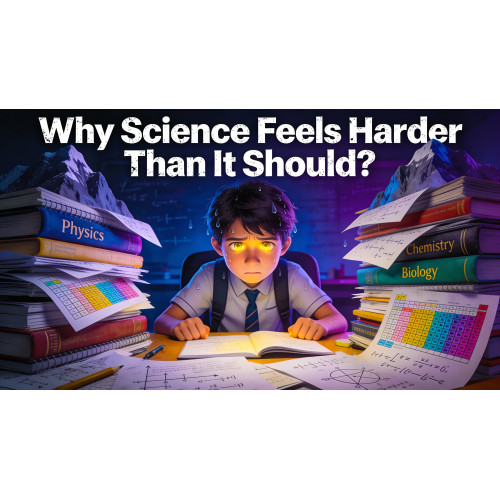
Every year, thousands of capable students fall behind in Triple Science — not because they lack ability, but because the way science is taught often works against how the brain learns.
As educators, we assume that if content is explained clearly enough, understanding will follow.
As parents, we’re often told that more revision, more notes, and more practice questions are the answer.
Yet research in cognitive science and educational psychology tells a different story.
Learning speed and long-term retention depend less on effort — and more on how information is structured.
This is one of the primary reasons science feels harder than it should.
Science is not a subject built on isolated facts.
It is a subject built on systems and relationships, such as:
1) Biological processes
2) Chemical mechanisms
3) Physical models and laws
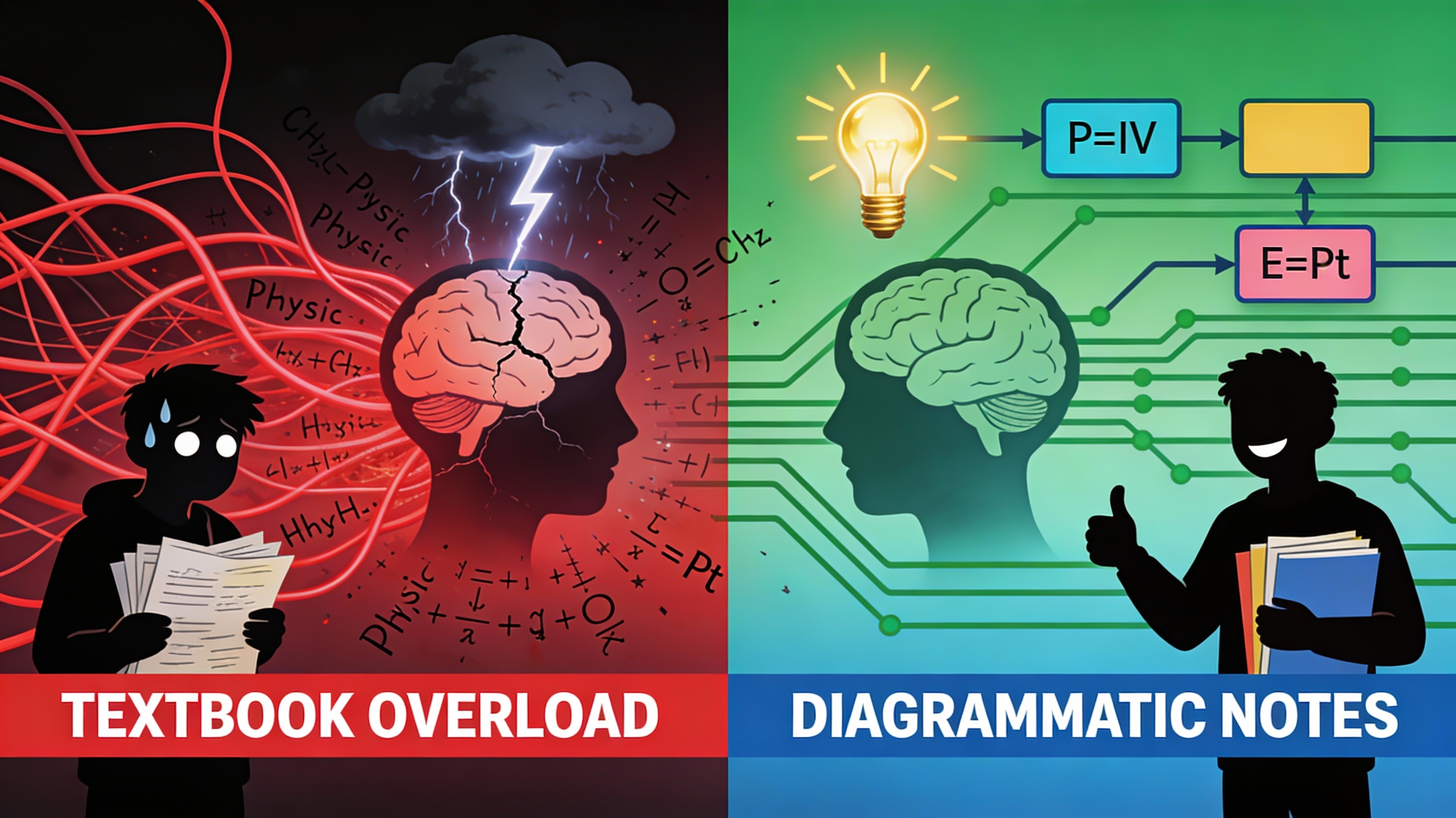
When these systems are taught primarily through text-heavy notes, students are forced to mentally construct the relationships themselves — often inaccurately, and always inefficiently.
This is why many students can memorise content yet struggle to:
explain scientific concepts clearly
apply knowledge to unfamiliar exam questions
retain understanding beyond short-term revision
The difficulty is not the science itself.
It is the way information is presented...
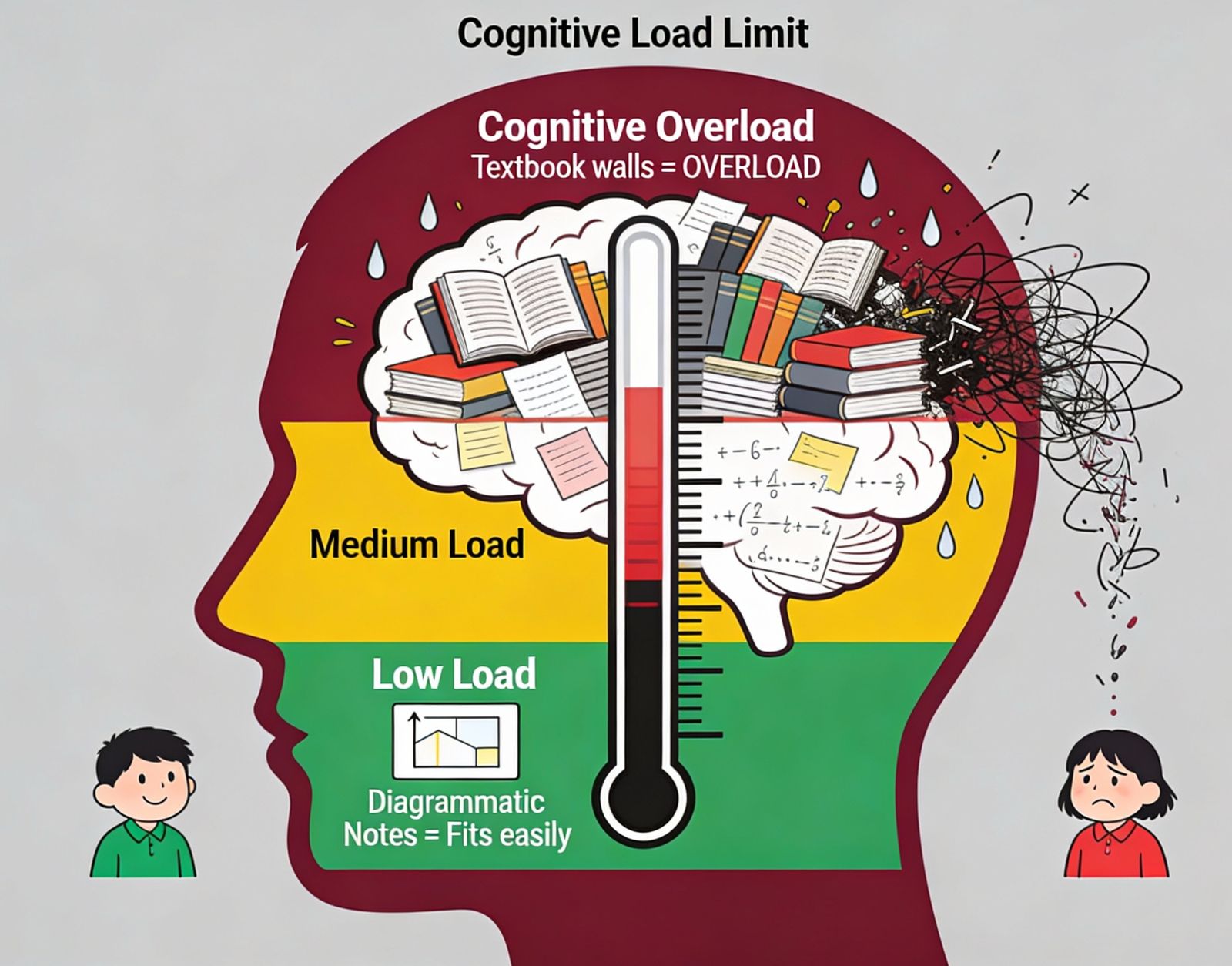
Educational psychology refers to this problem as cognitive load — the amount of mental effort required to process information at once.
When scientific information is poorly structured:
more effort is spent decoding language
less capacity remains for understanding
memory becomes fragile
exam stress increases
Over time, students may work harder while making less progress, reinforcing the belief that science is “naturally difficult”.
In reality, the barrier is rarely ability.
It is representation.
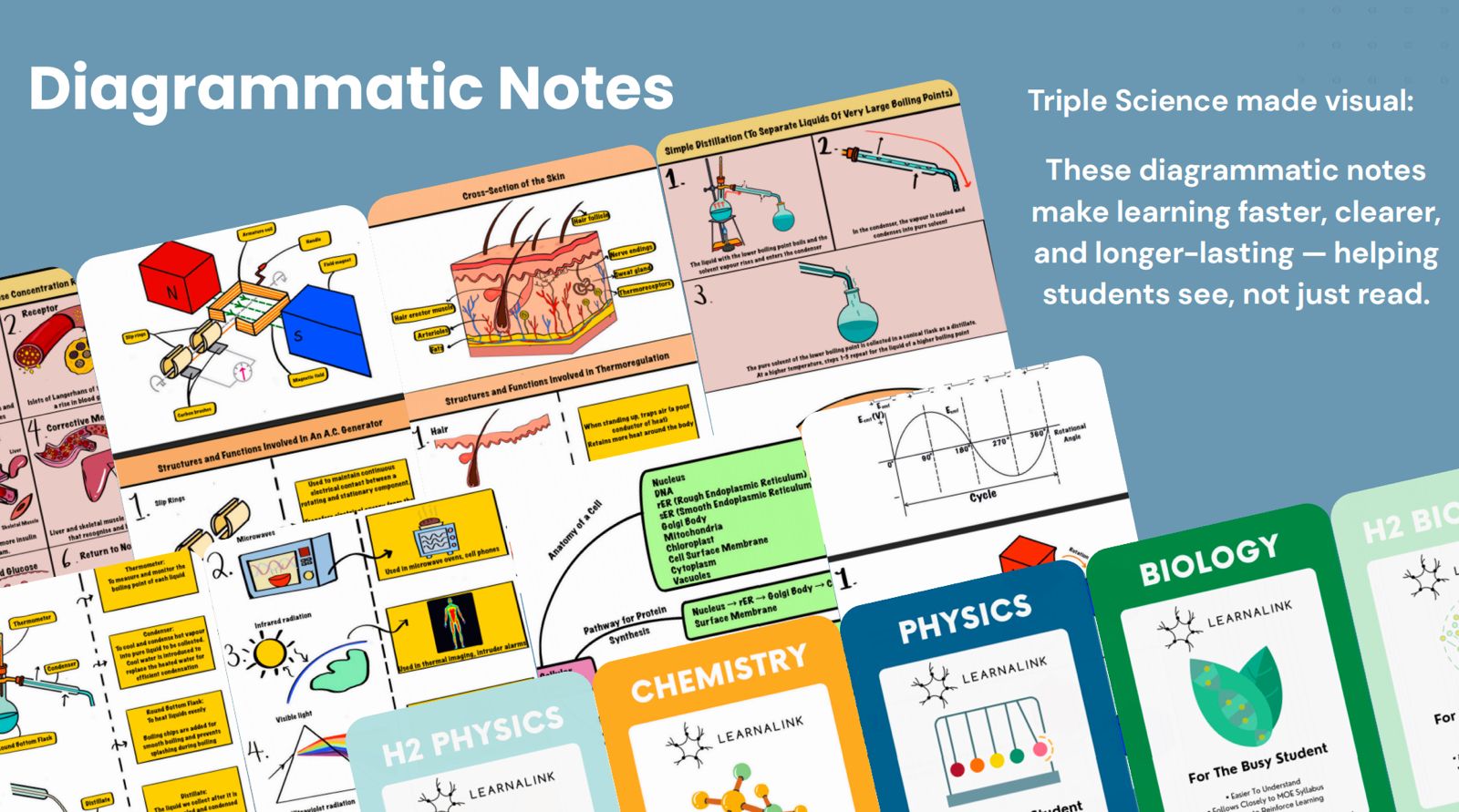
Decades of research show that diagrammatic representation significantly improves comprehension, recall, and application — particularly in complex subjects such as GCSE and A-Level science.
Well-designed diagrammatic notes:
externalise thinking
reduce unnecessary cognitive load
make scientific relationships explicit
Rather than memorising disconnected facts, students form accurate mental models they can recall and apply under exam conditions.
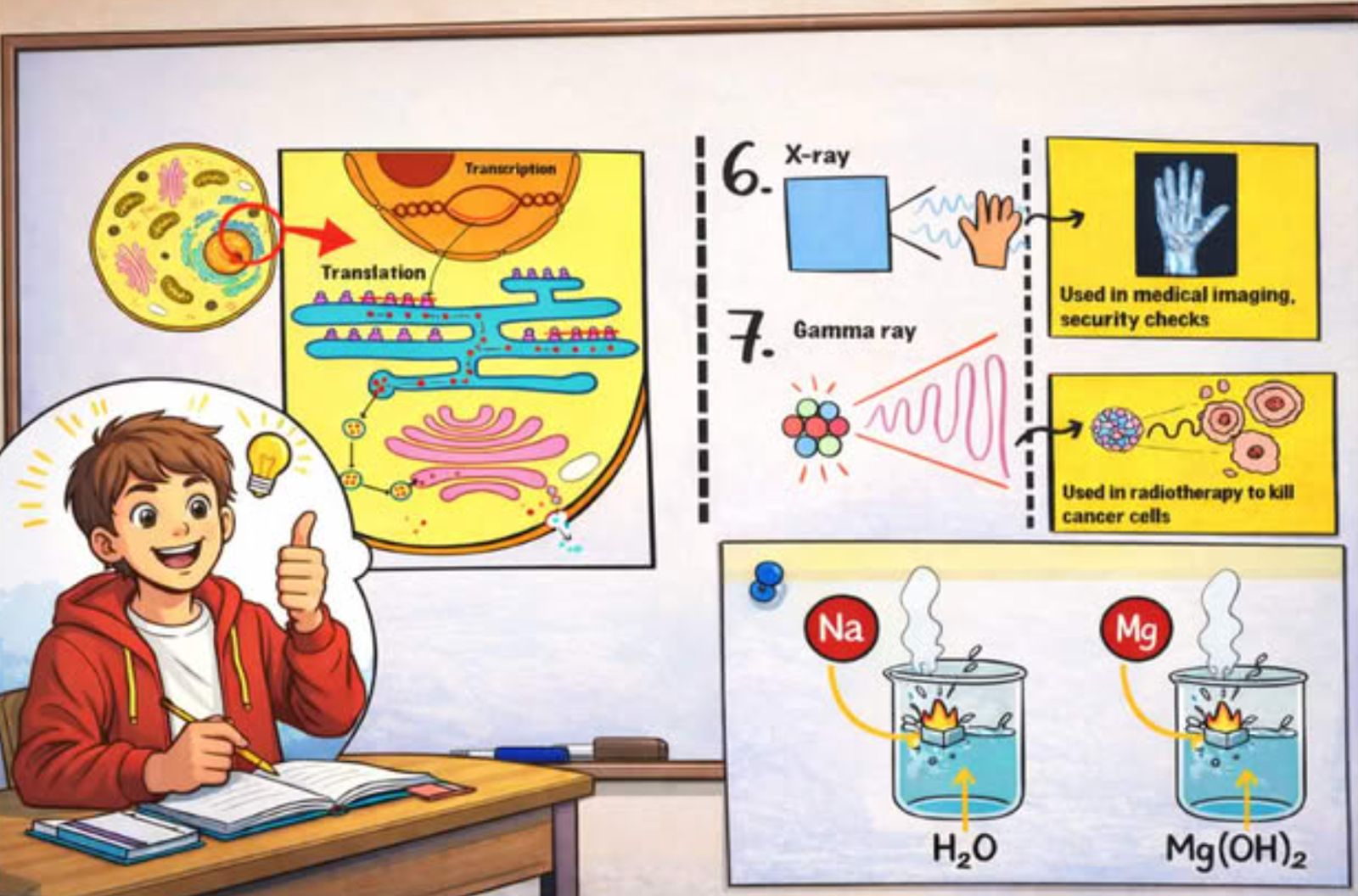
In practical terms, diagrams allow students to see the science before they are expected to write about it, just like so:
General science resources are designed for breadth.
But good Science resource requires both depth and precision.
When teaching materials are created specifically for Science — and structured visually from the outset — students learn faster, retain information longer, and approach exams with confidence rather than confusion.
This approach does not simplify the subject.
It respects its complexity.
At our core, we focus on one thing:
Delivering Triple Science as a connected, visual system — not a collection of facts.
That is why we are a Triple Science Specialist, powered by diagrammatic notes.
For parents seeking an effective and academically sound way to support their child in Triple Science, our Essential Program was designed to align with how students actually learn.
By presenting complex scientific ideas as clear, connected visual systems, students gain a framework they can return to throughout the course — reducing revision anxiety and supporting consistent, long-term progress rather than last-minute cramming.
For parents, the outcome is not only stronger grades, but confidence and clarity.
For students, it is the difference between memorising science and understanding it.
Please sign in first.
Sign in
Create a free account to save loved items.
Sign in