
Why Diagrammatic Learning is the Key to Thriving in a Content-Heavy World
Jan 28, 2026


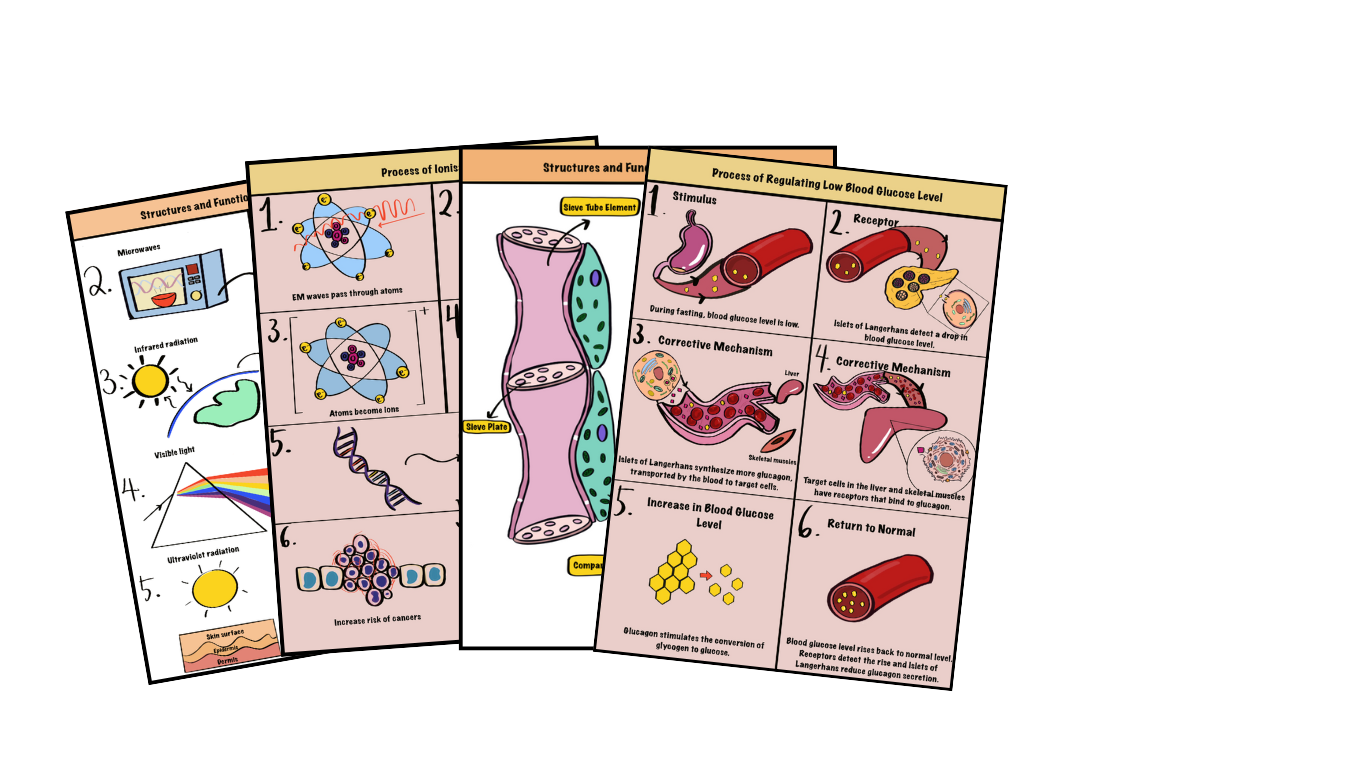

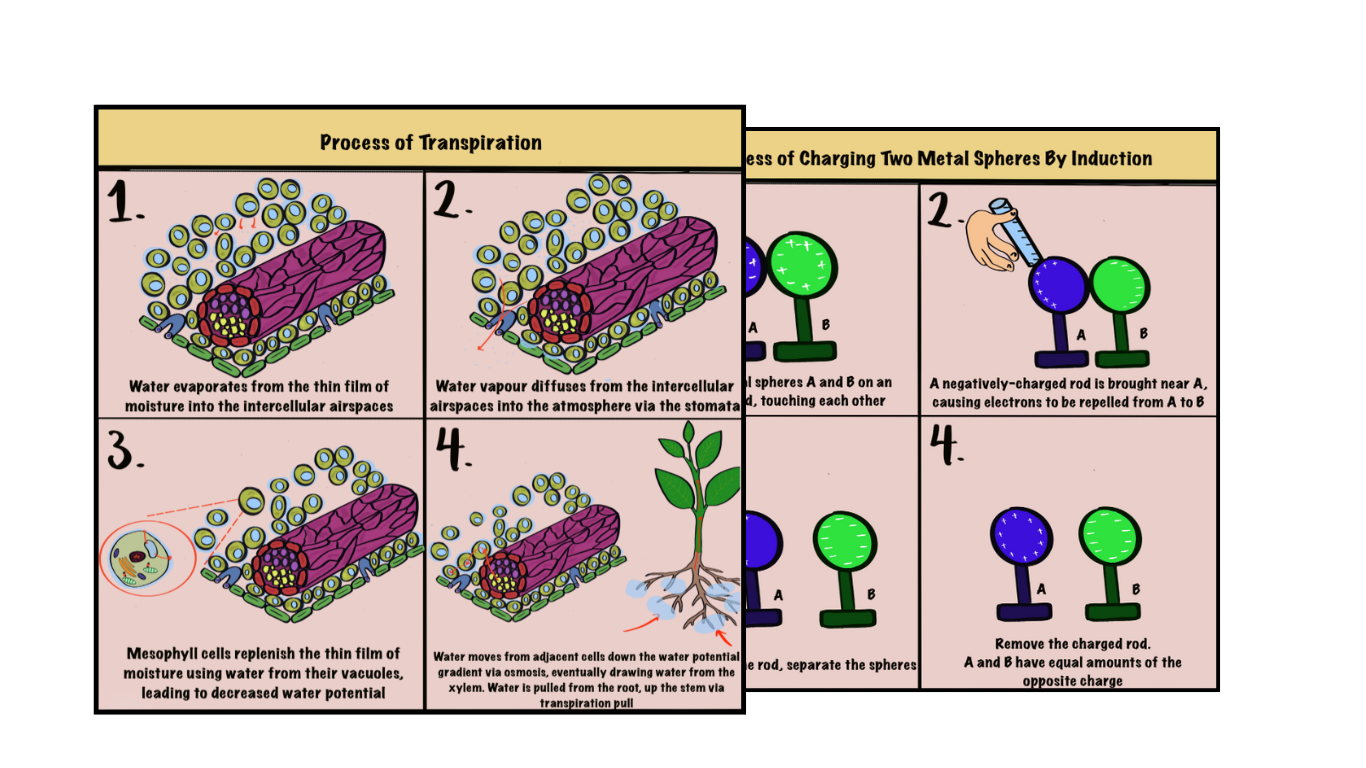

Today’s students are faced with an unprecedented amount of content to absorb, it’s no surprise that many feel overwhelmed. Traditional methods of long paragraphs, endless highlighting, and rote memorisation are no longer enough. What students need isn’t more content, but a smarter way to connect, retain, and recall it. That’s where diagrammatic learning comes in.
Educational psychology has long shown that humans are visual learners at heart. Studies indicate that we process visuals 60,000 times faster than text, and retention rates can be up to 65% higher when information is paired with meaningful visuals. This is especially critical in science, where relationships between processes (like osmosis, mitosis, or energy flow) matter more than just knowing definitions.
Instead of memorising a paragraph, a well-structured diagram allows students to see cause-and-effect, compare systems, and recall entire topics in a single glance.
Clarity in Complexity
Biology and Physics are dense with details. Diagrammatic notes break them down into bite-sized, colour-coded visuals that eliminate clutter.
Connections Over Cramming
By visually linking concepts (e.g., how respiration connects to energy, or how circuits influence current flow), students understand why things happen, not just what happens.
Stronger Recall Under Exam Pressure
In exam halls, students often forget lengthy explanations. A visual anchor—a labelled diagram, a process flow—helps them reconstruct the full answer quickly.
Efficiency for Busy Students
With multiple subjects competing for time, diagrammatic notes let students revise entire chapters in minutes instead of hours.
Diagrammatic learning isn’t just about scoring As. It trains students to organise, simplify, and communicate ideas clearly—a skill that extends into university, careers, and everyday problem-solving. From presenting projects to tackling real-world challenges, the ability to turn complexity into clarity is invaluable.
At Learnalink, we’ve built our teaching around this philosophy. Our diagrammatic notes are:
Visually organised with colour coding and simple layouts.
Aligned to the O- and A-Level syllabus, ensuring exam relevance.
Designed for memory, helping students retain not just facts, but relationships.
Students who once felt lost in dense paragraphs now find confidence in recalling key ideas at a glance.
If your child has ever said “Science is too much to memorise”, it’s not a lack of ability! It’s a lack of the right approach. At Learnalink, we turn heavy content into clear, digestible visuals that make learning faster, easier, and more effective.
👉 Join our Trial Class today and experience firsthand how diagrammatic learning helps students stay confident, prepared, and ahead of the curve.
Please sign in first.
Sign in
Create a free account to save loved items.
Sign in